 Pocket72
Useful knots
Four knots for tarps, loads and rescue
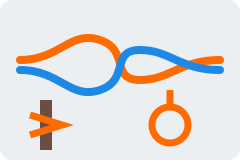
A few well-learned knots are more useful than many half-remembered ones. Practise them at home with a piece of rope until you can tie them with your eyes closed.
Square knot (reef knot)
- Joins two ropes of the same thickness, for example to tie a bundle.
- Right over left and under, then left over right and under. The ends must lie on the same side.
- Do not use it for loads that could hurt someone if it slips.
Bowline
- Makes a fixed loop that does not tighten, for example around a tree or a post.
- Make a small eye in the rope, pass the end up through the eye, around the main rope and back down into the eye.
Clove hitch
- Quickly ties a rope to a pole or a tree, for example to start a tarp line.
- Wrap the rope around the pole, cross it over itself and wrap again, then tuck the end under the second turn.
Taut-line hitch
- An adjustable knot for tent and tarp lines: it slides to tighten and holds under load.
- Wrap the end twice around the line inside the loop, then once outside, and pull tight.
Common mistakes
- Using a knot you are not sure of for climbing or lifting people: that needs training and proper equipment.
- Leaving ends that are too short.
Checklist
- 10–20 m of strong cord
- Knife or scissors
- Practise each knot five times
Sources
Pocket72 does not replace the authorities or the emergency number. In danger, call 112 (or your local number) and follow official instructions. No medical advice, no medicine doses and no wild plants: take a first-aid course.