 Pocket72
Signals for rescue
Be seen and heard: whistle, mirror, light and ground signs
Rescuers find you faster if you make yourself easy to see and hear. The international rule is: three of anything is a call for help.
Sound
- Call 112 first (a text or the 112 app works with weak signal); only then use signals. Stay where you are.
- Three blasts on a whistle, repeated, carry much further than your voice and use less energy.
- The alpine signal is six signals a minute, then a minute of silence; the answer is three a minute.
Light
- At night, flash a light three short, three long, three short: SOS.
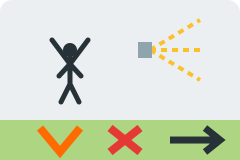
- A phone screen is weak: use a mirror or any shiny object and sweep the flash across the target.
Ground signs
- Make large shapes with contrasting materials, at least 3 metres long, in an open space.
- V means "we need help"; X means "we need medical help"; an arrow shows the direction you took.
- Three fires in a triangle, or three piles of stones, are an international distress signal.
Helicopters
- Both arms raised in a Y shape means "yes, we need help"; one arm up and one down means "no".
- Keep away from the rotor and secure loose objects.
Common mistakes
- Shouting until you lose your voice.
- Leaving the place where you made the signals.
Checklist
- Whistle
- Signal mirror
- Flashlight with spare batteries
- Bright-coloured cloth
Sources
Pocket72 does not replace the authorities or the emergency number. In danger, call 112 (or your local number) and follow official instructions. No medical advice, no medicine doses and no wild plants: take a first-aid course.