 Pocket72
Collecting and storing water
How much, where to find it and how to keep it safe
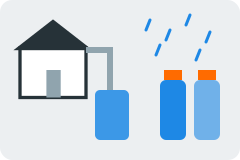
Water matters more than food. Plan at least 3 litres per person per day for drinking and basic hygiene, more in heat or for children who are ill.
Storing water at home
- Store bottled water from the shop and rotate it before the date on the label.
- If you fill containers yourself, use clean food-grade containers with a lid, from the tap.
- Store them in the dark, away from fuel and chemicals, and change the water every six months.
- Label containers with the date.
Hidden water at home
- The hot-water tank and the water in the pipes can be used if the network stops. Switch off power and gas to the heater, let it cool, then open the drain valve at the bottom. Never use water from heating radiators or boilers.
- Water from the toilet tank (not the bowl) can be used for washing, not for drinking unless treated. Do not use it if there are cleaning tablets in it.
Collecting water outside
- Rainwater collected in clean containers is often cleaner than surface water, but treat it before drinking.
- Choose running water upstream of houses and farms; avoid water with oily film, foam or strange smell.
Making it safe
- Let cloudy water settle and filter it through a clean cloth.
- Boil it for one minute at a rolling boil, then let it cool in a covered container. Above 1,000 m of altitude, boil for 3 minutes.
- If you cannot boil, use unscented household bleach as shown in the Pocket72 water tool.
- Water polluted with fuel or chemicals cannot be made safe at home.
Common mistakes
- Storing water in containers that held chemicals.
- Drinking water from streams without treating it.
Checklist
- 3 litres per person per day stored
- Clean containers with lids
- Pot and fuel to boil
- Unscented bleach and dropper
Sources
- CDC – Water in emergencies
- U.S. EPA – Emergency disinfection of drinking water
- U.S. Army FM 3-05.70 "Survival" (2002), public domain
- Sphere Handbook (2018) – water, food and shelter standards
Pocket72 does not replace the authorities or the emergency number. In danger, call 112 (or your local number) and follow official instructions. No medical advice, no medicine doses and no wild plants: take a first-aid course.